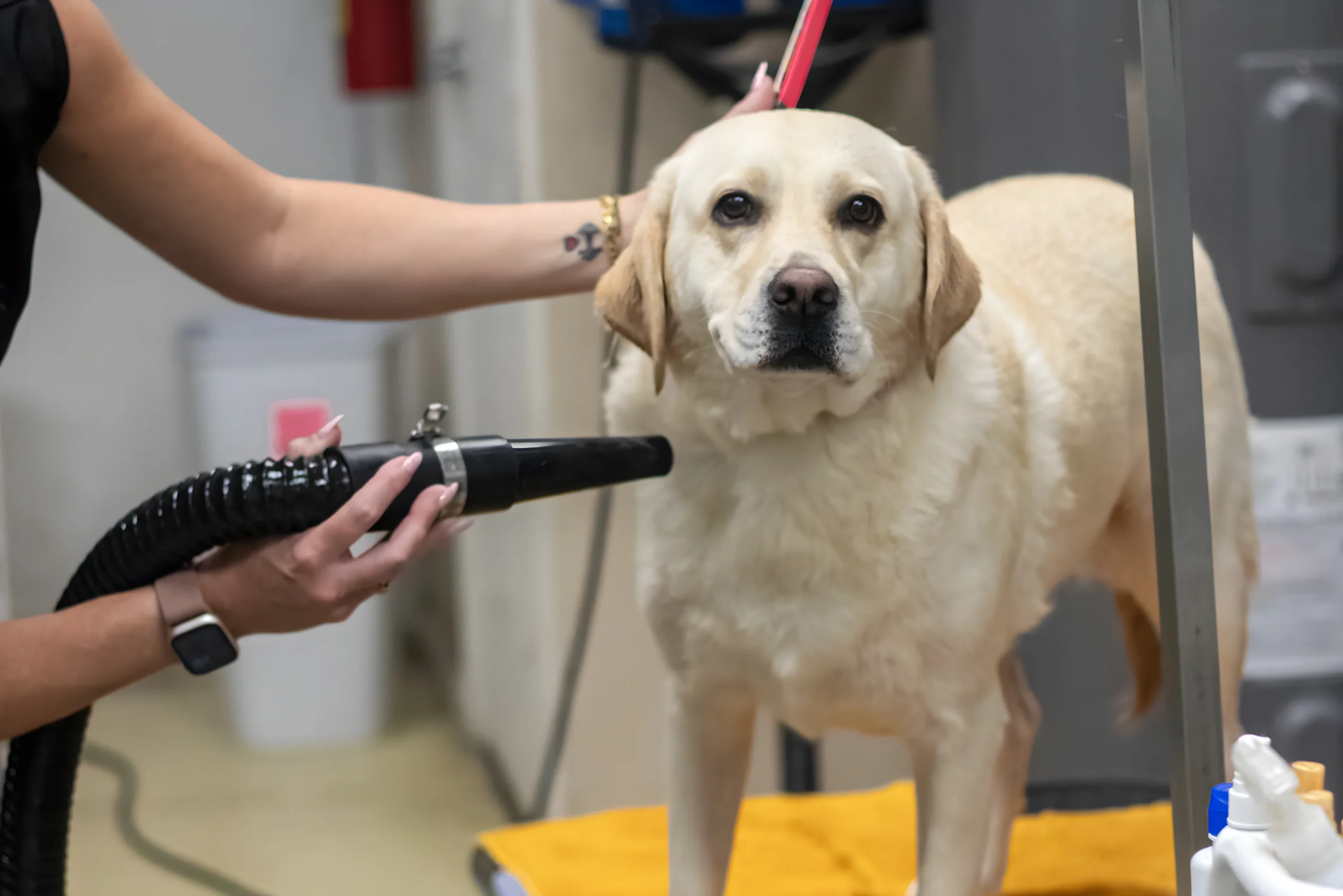
The difference between double coat vs single coat dog grooming comes down to structure. A double coat has a soft insulating undercoat beneath a coarser outer layer and sheds in seasonal waves. A single coat has one layer that grows more like human hair and tends to shed less but grow longer. Those two designs call for two different care routines, so once you know which one your dog has, brushing, deshedding, and grooming choices become much clearer and you stop fighting the coat you actually have.
How to tell which coat your dog has
Part the fur and look closely. If you see a dense, fuzzy layer of shorter hair sitting under a longer, coarser topcoat, that is a double coat. If the fur looks uniform from root to tip with no fluffy underlayer, that is a single coat. Two more quick clues help: double-coated dogs usually shed noticeably and feel plush when you press into the coat, while single-coated dogs shed little and often keep growing until they need a trim. The AKC keeps a helpful list of double-coated breeds if you want to check your dog’s type against known examples.
What a double coat needs
Huskies, Golden Retrievers, Pomeranians, and German Shepherds carry double coats built to regulate temperature. That undercoat sheds heavily twice a year, and if it is not removed it can pack down and trap heat and moisture against the skin, which makes a dog feel hotter rather than cooler. Regular brushing with an undercoat rake plus professional deshedding during shedding season is the winning combination. In our humid Port St. Lucie climate, keeping that undercoat cleared out is especially worth staying on top of, since a matted underlayer holds dampness close to the skin.
One rule matters above all: a double coat should almost never be shaved down. The AKC’s guidance on grooming a double-coated dog explains that the two layers protect against both heat and cold, and shaving can damage how the coat grows back. Instead of shaving, the goal is thinning out the dead undercoat while leaving the protective structure intact so the coat can still do its job. Our specialty treatments are built for exactly this kind of heavy undercoat work, pulling out the loose fluff without stripping the coat your dog needs.
What a single coat needs
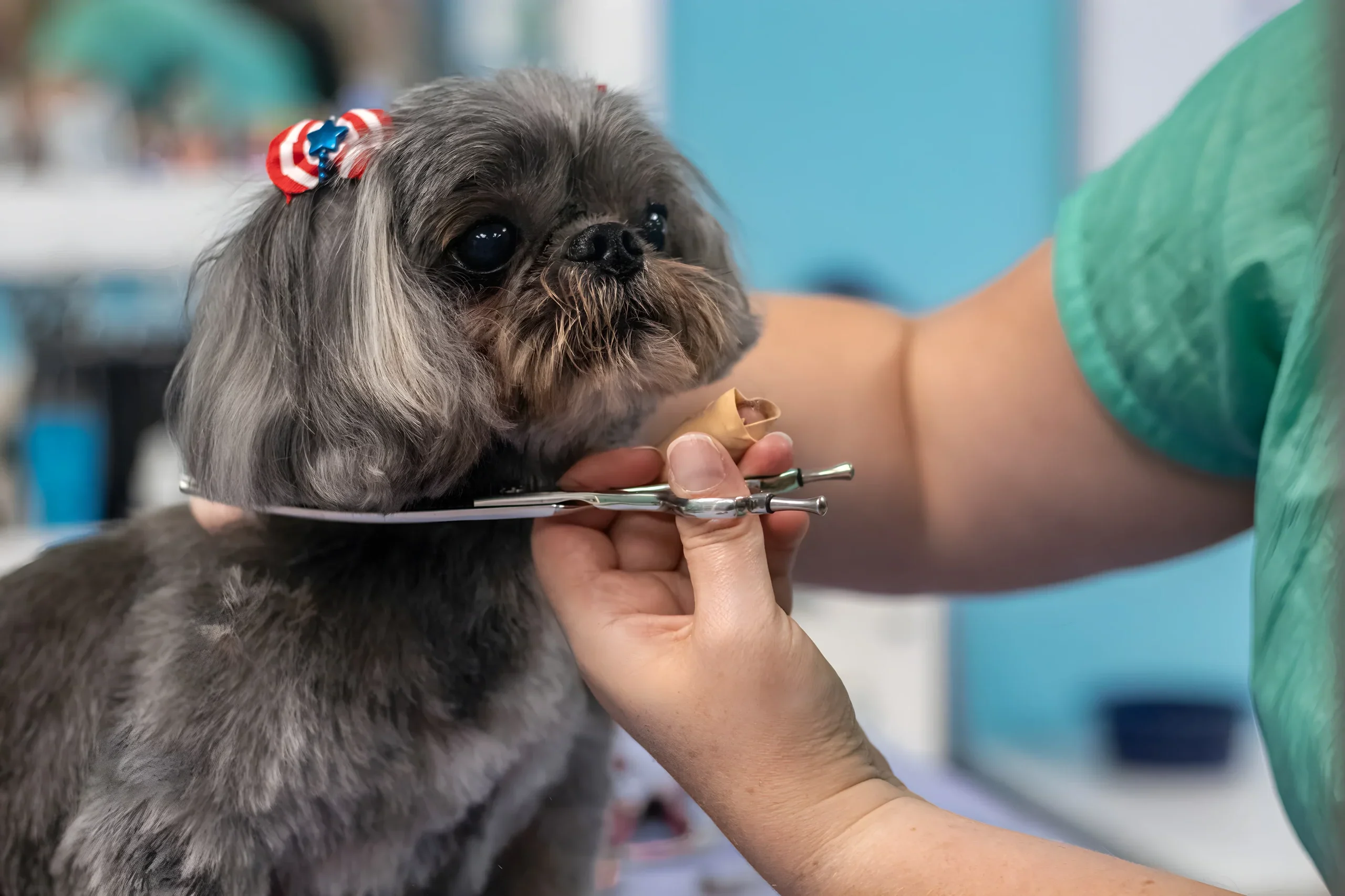
Poodles, Maltese, Yorkies, and Shih Tzus have single coats that grow continuously. They shed less, which many owners love, but that same trait means the hair keeps getting longer and tangles instead of falling out. Single coats mat easily, especially behind the ears, under the legs, in the armpits, and around the collar where movement and friction work the hair into knots. These dogs generally need haircuts on a regular cycle and consistent brushing to stay tangle-free. A slicker brush followed by a comb check is a reliable home routine: if the comb glides from skin to tip, the coat is truly clear rather than just smooth on top.
Brushing and shedding, side by side
- Double coat: rake out the undercoat, expect seasonal blowouts, never shave, lean on deshedding.
- Single coat: brush to the skin to prevent mats, plan for regular trims, expect steady growth over shedding.
- Both: skin health drives coat health, so watch for dryness, dullness, or irritation.
- Both: match the tool to the coat, since the wrong brush either misses the undercoat or scrapes a single coat.
Whichever type you have, coat quality reflects what is happening at the skin. Ongoing skin and coat care keeps the coat conditioned and helps you spot changes early, before a dull patch or a hidden mat turns into a bigger project. If the skin looks inflamed, has open sores, or your dog is scratching a spot raw, contact your veterinarian. Those are medical signs, and grooming is not a treatment for them.
Which approach fits your dog
If your dog blows a thick undercoat every spring, plan around deshedding and skip the shave. If your dog grows a coat that never seems to stop, plan around regular haircuts and daily brushing. Mixed-breed dogs sometimes land in between, with a bit of undercoat and a coat that also needs trimming, and in that case the plan borrows from both routines. Not sure which camp your dog falls into? Bring your dog in and we will identify the coat and build a plan around it.