
Most dogs do well with professional grooming every four to eight weeks, and the right interval comes down to coat type, activity level, and how much brushing happens at home. A short-coated Labrador can often stretch toward eight weeks, while a doodle or a Shih Tzu usually needs attention every four to six weeks to stay comfortable and free of mats. There is no single number that fits every dog, so the real goal is to find the rhythm that keeps your dog’s particular coat easy to manage. The sections below break the schedule down by coat so you can match it to the dog in front of you, then fine-tune as the seasons and your dog’s routine change through the year.
The short answer, then the details
Grooming is not one schedule for every dog. Think in two layers. Bathing sets how often the coat and skin get a full reset, and full grooming sets how often the coat gets trimmed, deshed, and tidied. A dog that only needs a bath and brush can go longer between visits than one that needs a scissor trim to hold its shape. The American Kennel Club notes that how often you wash a dog depends heavily on coat and lifestyle rather than a fixed calendar. Use the coat guides below as your starting point, then adjust for your dog’s habits, the weather, and how much time you have for brushing at home.
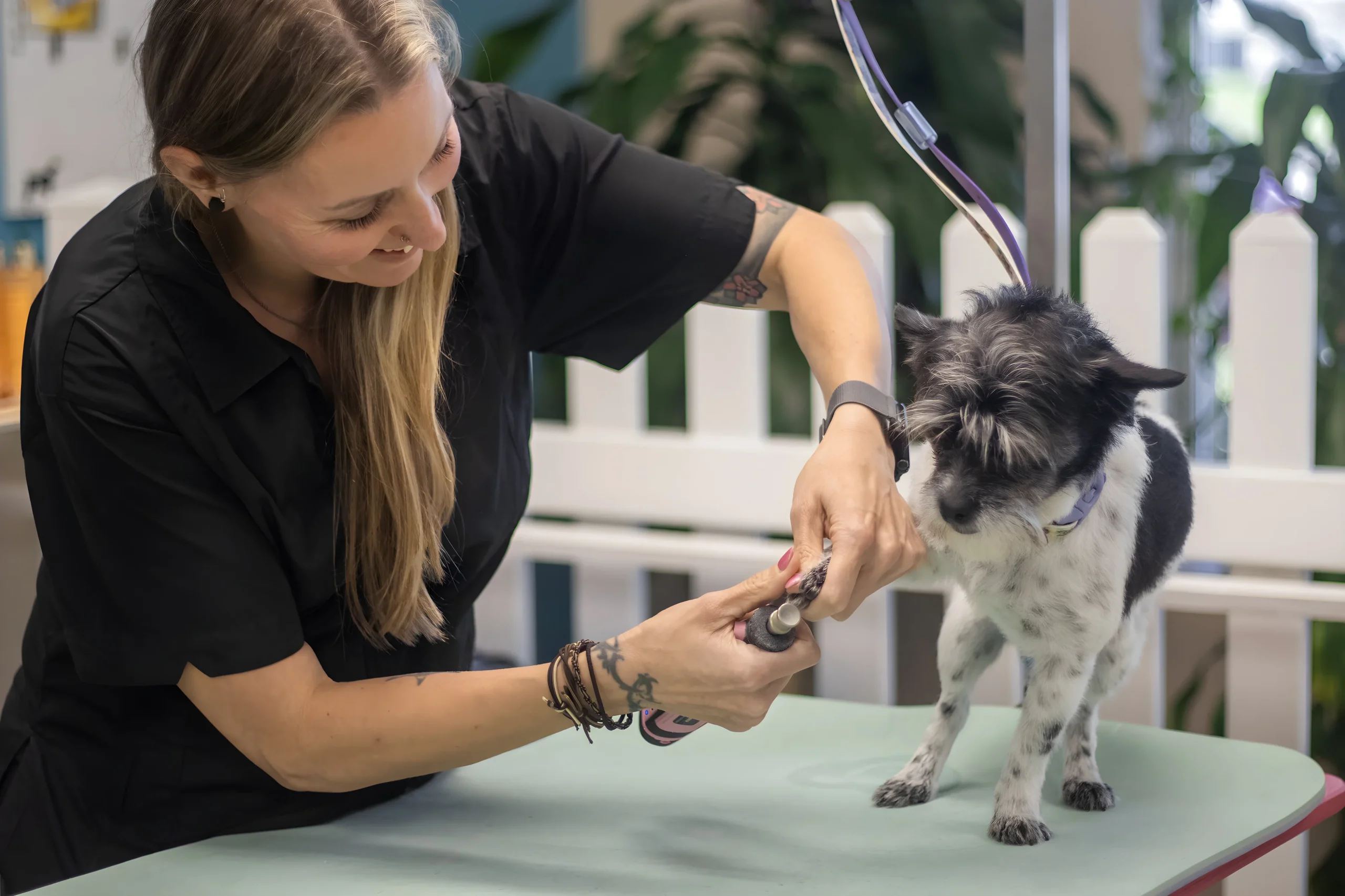
A simple test helps you decide when to move up or down the range. If your dog still looks and smells clean, the coat brushes through easily, and the nails are quiet on the floor, you can lean toward the longer end. If mats are starting, the coat feels greasy, or brushing turns into a fight, shorten the interval. Your dog’s coat gives you honest feedback every week if you take a minute to run your hands through it.
Short and smooth coats
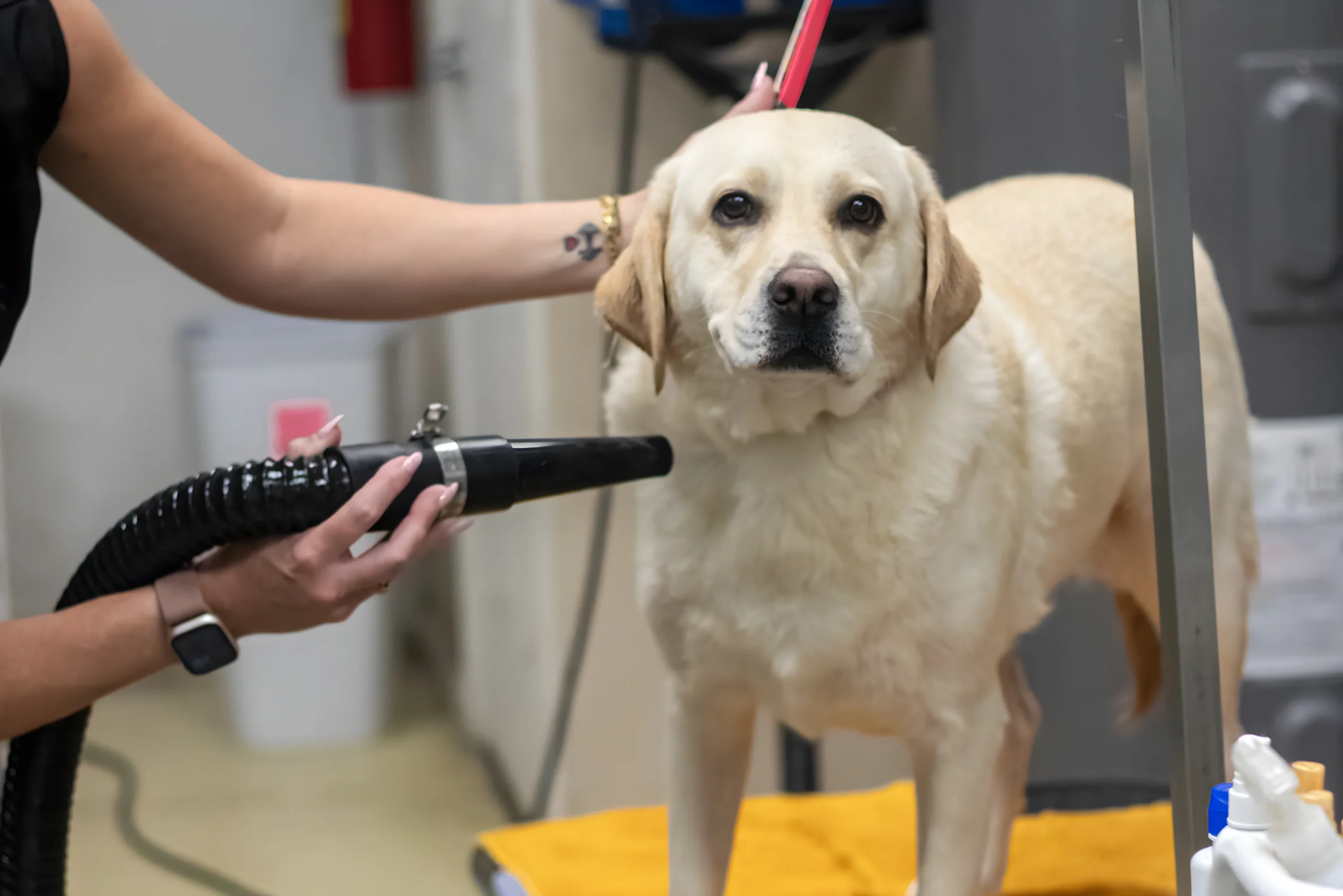
Breeds like Labs, Beagles, Boxers, and many mixed-breed short-hairs are the lowest-maintenance group. A bath and brush every six to eight weeks keeps the coat clean and the shedding under control. Between visits, a quick weekly pass with a rubber curry brush pulls loose hair and spreads the natural oils that give a short coat its shine. Do not let the easy coat fool you into skipping the rest of the dog: nails still grow, ears still collect wax, and short-coated dogs that swim or roll in the yard can pick up a strong odor that a bath resolves. A short coat is forgiving, but it is not maintenance-free.
Double coats and heavy shedders
Huskies, Golden Retrievers, German Shepherds, and Australian Shepherds carry a soft undercoat under a coarser outer coat. These dogs benefit from grooming every six to eight weeks year-round, with extra deshedding visits during spring and fall blowouts when the undercoat sheds in waves. A proper deshedding treatment removes far more loose undercoat than home brushing alone, and it keeps that fluff off your floors and furniture. If you are finding drifts of hair in every corner, that is the signal to add a mid-cycle deshed rather than wait for the next full appointment. Regular skin and coat care also helps you catch dryness or dull texture early, before it turns into a coat that mats or holds odor.
Curly and non-shedding coats
Poodles, doodles, Bichons, and similar curly coats grow continuously and trap loose hair inside the curl, which is exactly how mats form. This group needs full grooming every four to six weeks without exception. Stretch past that and you often trade a trim for a much shorter cut, because once mats pack down tight against the skin they cannot be brushed out safely and the kind choice is to clip them off. Daily or near-daily line brushing at home is the single best thing an owner can do between appointments; work in sections down to the skin rather than skimming the surface, since surface brushing leaves a hidden mat layer underneath. When it is time for a fresh trim, our grooming and styling service keeps the shape clean and even.
Long, flowing coats
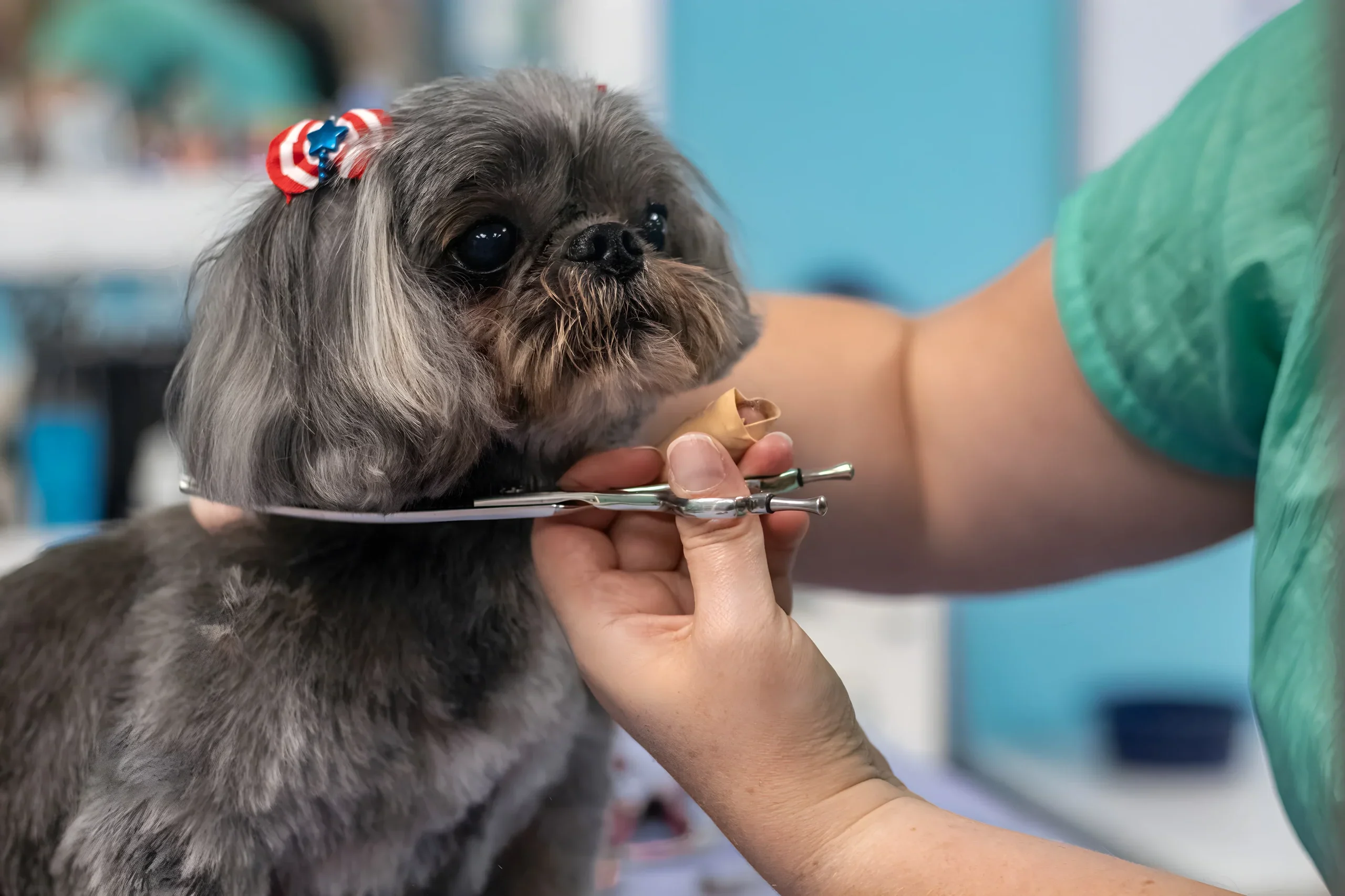
Shih Tzus, Yorkies, and Maltese kept in a long coat sit at the high-maintenance end. Full grooming every four to six weeks is standard, and many owners choose a shorter puppy cut to make daily upkeep realistic when brushing time is limited. A long coat looks beautiful but demands honesty about your schedule: if a full-length coat is not getting brushed most days, a tidy shorter style is far more comfortable for the dog than a coat that keeps matting. The AKC’s guide to grooming a dog is a good reminder that face, feet, and sanitary areas often need touch-ups sooner than the full body, so even a well-kept long coat may want a quick mid-cycle tidy.
What shifts your dog’s schedule
- Active outdoor dogs and beach-goers here in Port St. Lucie need baths more often than homebodies.
- Puppies benefit from early, frequent short visits to build comfort with the process.
- Senior dogs may need gentler, more frequent sessions rather than long ones.
- Consistent home brushing can stretch the time between full grooms.
- Skin that gets oily or itchy quickly is a sign to shorten the interval.
- Humid Florida weather can leave any coat feeling heavier and damp, which shortens the comfortable window between baths.
Notice how several of these factors can stack. A young doodle that swims all summer sits at the short end of the range on nearly every count, while a calm senior Beagle that mostly naps indoors can hold a longer schedule. Rather than picking one rule, add up the factors that apply to your dog and let them nudge the interval in one direction or the other.
If your dog’s skin looks red, raw, or suddenly flaky, that is a veterinary question, not a grooming one. Grooming keeps a healthy coat healthy. It does not treat a medical problem.
Set a rhythm that fits your dog
The easiest way to stay on schedule is to book the next visit before you leave, so the rhythm sets itself and the coat never falls far enough behind to become a project. Tell us your dog’s coat and routine and we will suggest an interval that keeps things easy and comfortable, then refine it as we see how your dog’s coat holds up between appointments.