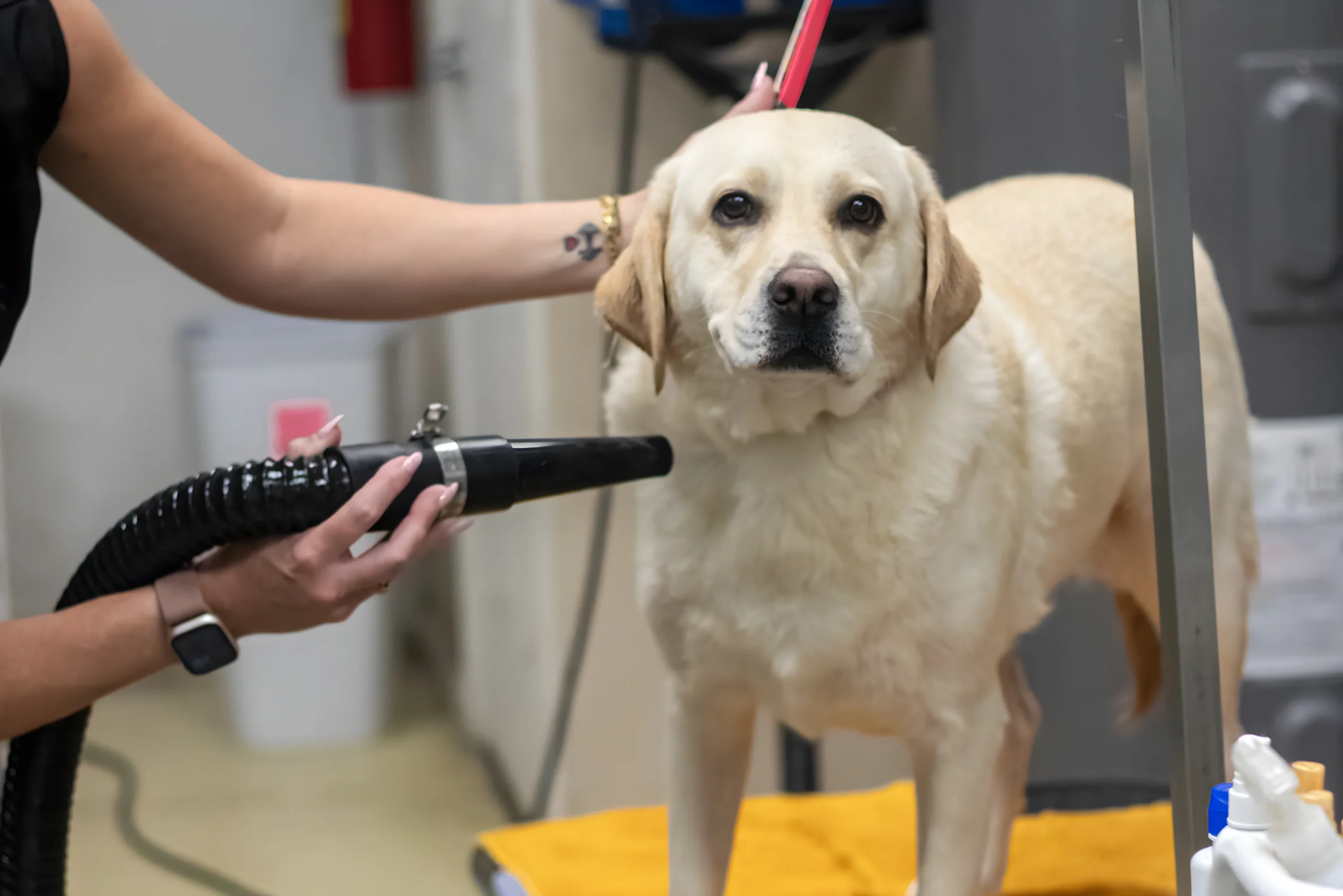
The clearest signs your dog needs grooming are mats you can feel, a lingering odor after a bath is overdue, nails you hear clicking on the floor, dirty or smelly ears, and a coat that has gone dull and greasy. Most of these are simple maintenance issues that a grooming visit resolves, and none of them tend to fix themselves. A few, though, point to something medical rather than cosmetic. This guide sorts the everyday grooming signs from the ones that mean you should call your veterinarian instead, so you know which door to knock on.
Coat and skin signs
Run your hands over your dog every week and the coat will tell you what it needs. A weekly once-over turns grooming from a guessing game into a quick check you can do on the couch. The ASPCA points out that regular grooming is part of keeping a dog comfortable and lets you catch problems before they grow, which is exactly why a routine hands-on check matters.
- Mats or tangles you cannot slide a brush through, especially behind the ears and under the legs.
- A greasy, dull coat or a doggy odor that returns quickly.
- Loose hair coming out in clumps or shedding that has taken over the house.
- Visible dirt, sand, or debris trapped in the coat after outdoor play.
Tight mats are more than cosmetic. They pull at the skin and trap moisture, and once they pack down they cannot be brushed out without hurting the dog, so a full deshed or a fresh trim is the fix. The sooner you catch a mat while it is still loose, the more of the coat we can save. Our specialty treatments handle heavy shedding and stubborn coat buildup that a home brush cannot reach.
Nails, paws, and ears
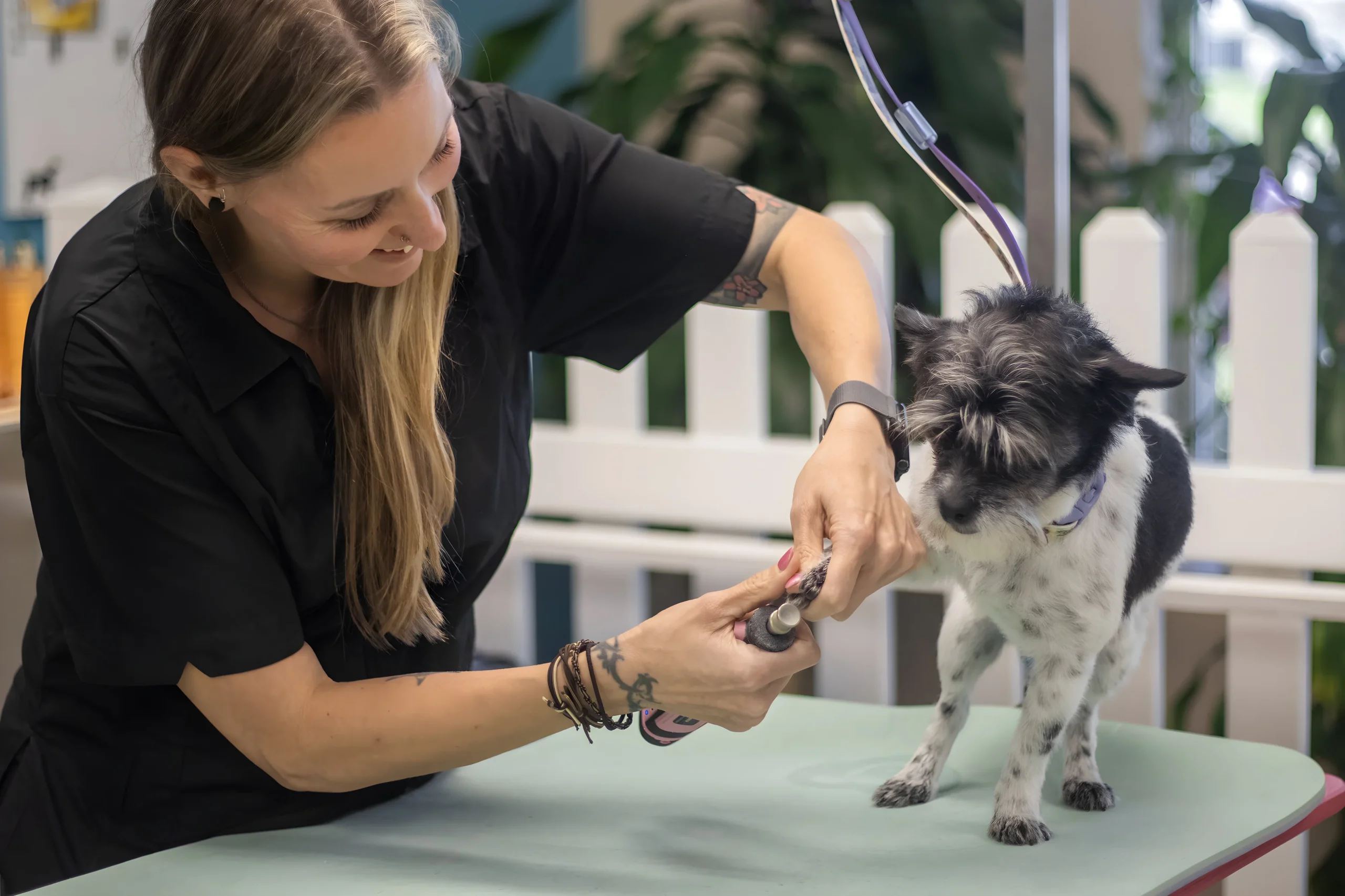
These are the areas owners forget until they become a problem. If nails click on hard floors or start to curve, they are too long and can affect how your dog stands and walks. Hair growing between the paw pads collects debris and can cause a dog to slip on smooth floors, and ears that look dirty or smell yeasty need cleaning. A good habit is to check paws and ears on the same day each week so nothing quietly gets ahead of you. The ASPCA’s grooming tips reinforce keeping nails and ears on a regular schedule rather than waiting for trouble.
- Nails touching the ground or clicking loudly.
- Excess hair between the pads or matting around the paws.
- Dirty ears, a noticeable odor, or heavy waxy buildup.
- Overgrown fur around the eyes or sanitary area.
Routine hygiene and wellness grooming keeps nails, ears, and sanitary trimming on track so small issues never pile up into an uncomfortable visit later. Staying ahead of these details is far easier on your dog than catching up all at once.
When to call your veterinarian, not the groomer
Some signs are not grooming problems at all, and grooming will not fix them. Contact your veterinarian rather than booking a groom if you notice any of the following, since these point to something that needs care beyond a bath and a brush.
- Red, inflamed, or broken skin, or open sores and hot spots.
- Bleeding, pus, swelling, or any area that seems painful to touch.
- Constant scratching, biting, or licking at one spot.
- Sudden hair loss in patches or a rapid change in the skin.
- A limp, cracked pad, or an ear that is painful and inflamed.
A groomer keeps a healthy coat clean and comfortable. We do not diagnose or treat skin conditions, infections, or injuries, and when we see something concerning we will always point you toward your vet first so it gets the right attention.
Book before small problems grow
The easiest coats to care for are the ones that never fall behind, because a coat kept on a steady rhythm rarely reaches the mat-and-odor stage in the first place. If you are spotting a couple of the signs above, it is time. Have a question about what your dog needs? Reach us through our contact page, and when you are ready, book a time that works for you.